Python Programming · Lesson 10 of 15 · Updated ·
Functions in Python — def, Parameters, return and Scope
A function is a named block of code you can run again and again. It keeps programs short, readable and easy to test.
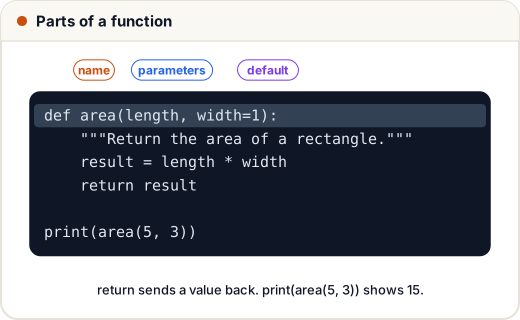
1. Define and call
def greet(name):
    print(f"Hello, {name}!")

greet("Asha")
greet("Ravi")
Hello, Asha!
Hello, Ravi!
defstarts a function, followed by its name and parameters in brackets.- The body is indented.
- Calling it with a value — an argument — runs the body.
2. return: give a value back
print only shows a value; return sends it back so you can use it.
def area(length, width=1):
    return length * width

a = area(5, 3)
print(a, area(4), area(width=2, length=6))
15 4 12
width=1is a default value used when no width is given.area(width=2, length=6)uses keyword arguments — order doesn't matter.- A function without
returnreturnsNone.
Returning several values
def stats(nums):
    return min(nums), max(nums), sum(nums) / len(nums)

low, high, avg = stats([4, 8, 6])
print(low, high, avg)
4 8 6.0
3. *args and **kwargs
*argscollects any number of positional arguments into a tuple.**kwargscollects keyword arguments into a dictionary.
def total(*args):
    return sum(args)

def profile(**kwargs):
    for key, value in kwargs.items():
        print(key, "=", value)

print(total(1, 2, 3, 4))
profile(name="Neha", city="Indore")
10
name = Neha
city = Indore
4. Scope: local vs global
Variables created inside a function are local — they exist only while it runs.
count = 10          # global

def show():
    count = 99      # a NEW local variable
    print("inside:", count)

show()
print("outside:", count)
inside: 99
outside: 10
To change a global variable inside a function, declare global count — but usually it's cleaner to pass values in and return results.
5. The mutable default trap
def add_item(item, basket=[]):     # the same list is reused every call!
    basket.append(item)
    return basket

print(add_item("pen"))
print(add_item("book"))
['pen']
['pen', 'book']
Fix it with None:
def add_item(item, basket=None):
    if basket is None:
        basket = []
    basket.append(item)
    return basket

print(add_item("pen"))
print(add_item("book"))
['pen']
['book']
This is a favourite interview question.
6. Docstrings
Put a description in triple quotes as the first line of the function. Tools and help() show it.
def is_even(n):
    """Return True if n is even."""
    return n % 2 == 0

print(is_even(10), is_even.__doc__)
True Return True if n is even.
Common mistakes
- Using
printinside a function when you needreturn. - Forgetting the brackets when calling:
greetvsgreet("Asha"). - Mutable default arguments (
def f(x=[])).
Quick recap
def name(params):+ indented body; call withname(args).returngives a value back; no return → None.- Defaults, keyword arguments,
*args(tuple),**kwargs(dict). - Local variables vanish after the call; prefer return over global.